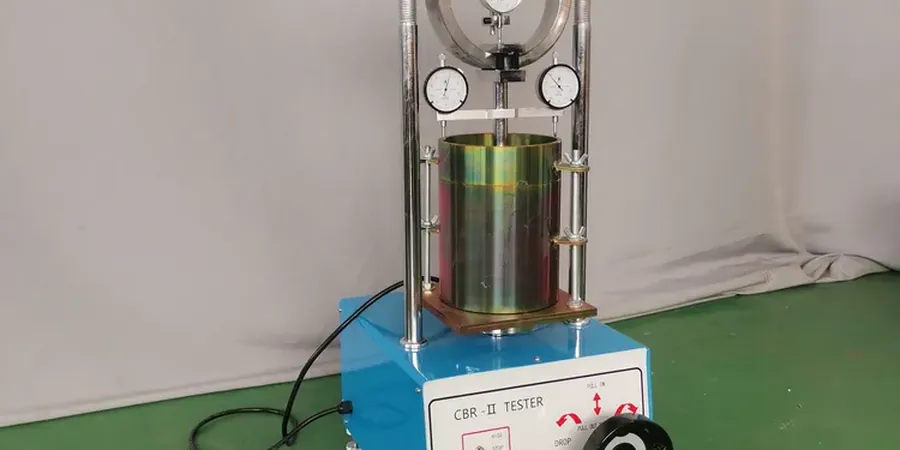
ASTM D1883 governs the laboratory CBR test, and in Grande Prairie it is not just a formality. The Peace River region's lacustrine clays and silty glacial tills react dramatically to moisture changes. A soaked CBR value often drops to 2% or 3% in these materials, while the unsoaked number looks deceptively high. We see this gap constantly in subdivisions off Resources Road and commercial pads near the airport. The design thickness of a flexible pavement section hinges directly on that soaked CBR figure. Without it, the granular base course becomes a guess. We run the test in our lab using standard compaction effort per ASTM D698 or modified effort per D1557, depending on the project spec. The result feeds directly into the AASHTO 1993 pavement design method or the mechanistic-empirical approach now gaining traction in Alberta.
A soaked CBR of 2% versus 6% can double the required pavement thickness in a Grande Prairie parking lot.
Methodology and scope
Local considerations
A common mistake we see in Grande Prairie is a contractor running only field density tests and skipping the laboratory CBR completely. They compact the clay subgrade to 98% standard Proctor, it looks solid, and then spring breakup hits. The frost leaves the ground, the moisture content spikes, and the subgrade turns to mush under the first loaded gravel truck. The soaked CBR test predicts that failure before the first cubic meter of asphalt is placed. Another error is using a CBR value from a borrow source 30 km away and applying it to the site subgrade. The lacustrine clays near Bear Creek vary significantly over short distances. A single test pit can show three different CBR profiles in three meters of depth. We correlate the CBR with the grain size distribution and the in-situ permeability to build a drainage strategy that protects the pavement section long-term.
Applicable standards
ASTM D1883-21, ASTM D698-12(2021), ASTM D1557-12(2021), AASHTO T 193
Associated technical services
Soaked CBR Determination
Full 96-hour immersion with swell tracking. We report the corrected CBR at 2.54 and 5.08 mm penetration, plus the swell percentage.
Unsoaked CBR for Granular Materials
Immediate penetration testing on compacted granular subbase at optimum moisture content, no soaking required.
Moisture-Density Relationship
Standard or modified Proctor compaction curves to establish the target density and moisture for CBR specimen preparation.
Pavement Thickness Design Support
We provide the design CBR value and supporting data to input directly into the AASHTO 1993 or MEPDG design software.
Typical parameters
Frequently asked questions
What is the typical turnaround time for a laboratory CBR test in Grande Prairie?
A standard soaked CBR test requires 96 hours of immersion plus compaction and penetration time. We typically deliver the final report within 7 to 10 business days from sample receipt. Expedited turnaround is available for an additional fee.
How much does a laboratory CBR test cost in Grande Prairie?
A single-point CBR test, including the moisture-density relationship, generally runs between CA$150 and CA$300 depending on whether you need standard or modified Proctor compaction and the number of points on the curve.
Do I need a soaked or unsoaked CBR value for my project?
In Grande Prairie, nearly every pavement design requires the soaked value. The native clays and silts are susceptible to seasonal moisture changes, and the NBCC and City of Grande Prairie standards mandate using the soaked CBR for subgrade strength. Unsoaked tests apply mainly to free-draining granular base course materials.
Can you run a CBR test on a sample we compacted in the field?
Yes. We can test undisturbed tube samples or remolded specimens prepared to the field density and moisture content you specify. This is common for forensic investigations when a pavement section fails prematurely.